
Eye care for dogs and cats in Benidorm, to look after their eyes.
Diagnosis and treatment of eye diseases in dogs and cats, with a specialist ophthalmologist: ulcers, conjunctivitis, glaucoma, cataracts and eyelid surgery. In Benidorm and across the Costa Blanca (Alicante). Early detection is key.
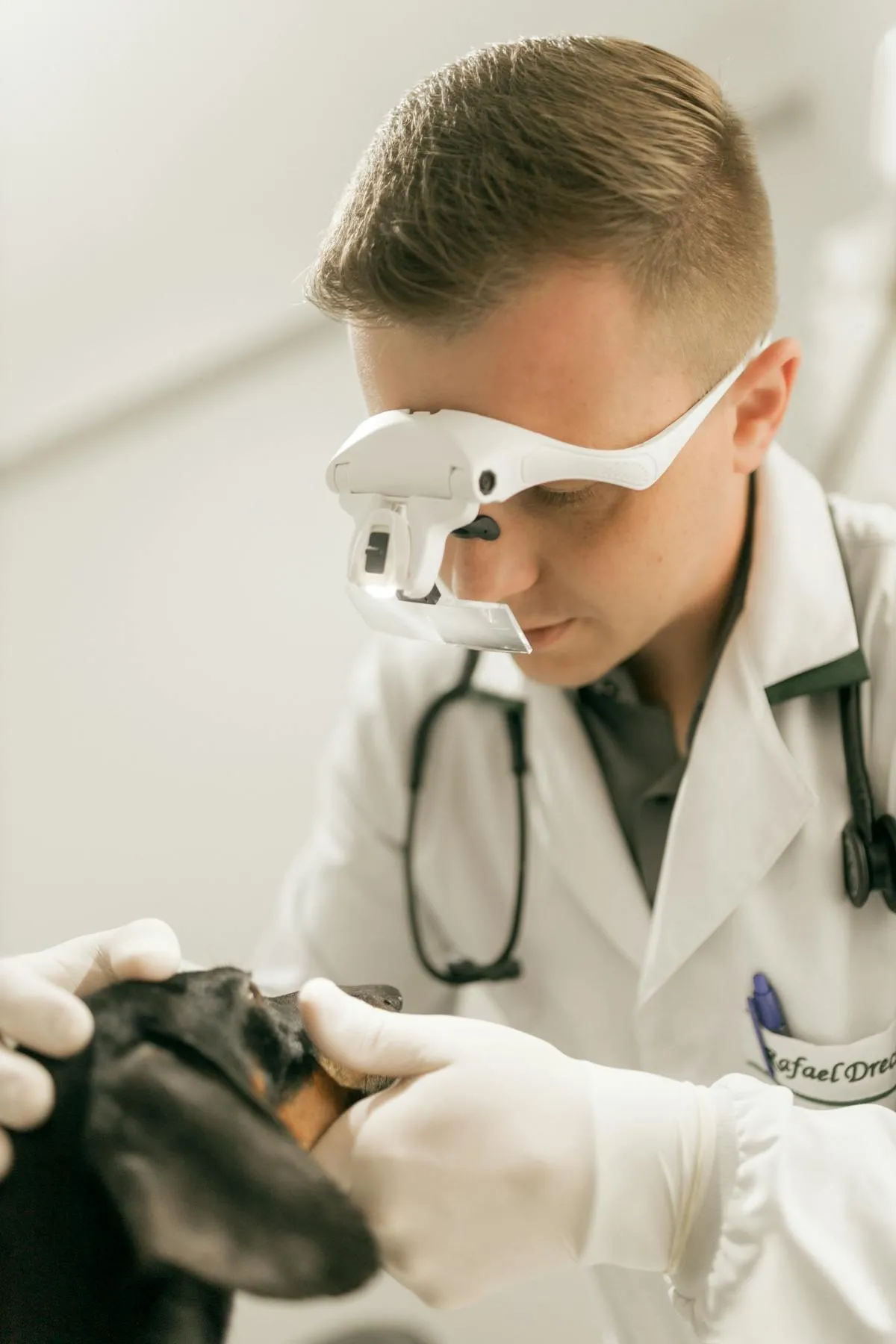

What is veterinary ophthalmology and when should you come in?
Veterinary ophthalmology is dedicated to the diagnosis and treatment of diseases of the eye and its surrounding structures (eyelids, conjunctiva, tear system), in both dogs and cats. It requires specific equipment and knowledge of each species' eye anatomy, which is why a specialist ophthalmologist holds clinics at our practice here in Benidorm (Costa Blanca, Alicante).
It matters because many eye conditions progress fast. Untreated glaucoma can cause irreversible blindness within hours or days. A red eye or watering that seem mild may hide something more serious.
- A red or inflamed eye, a sign of pain or infection.
- Excessive eye discharge: constant watering or green or yellow gunk.
- A half-closed eye or excessive blinking due to pain or discomfort.
- A white or bluish cloud over the cornea or inside the pupil.
- It bumps into objects or seems unsure going down stairs.
- It rubs its eye with a paw or against the furniture.
What an ophthalmology consultation involves
Clinical history (anamnesis)
We talk with you to find out when the symptoms started and whether there's been any previous treatment.
Neuro-ophthalmic examination
We assess the reflexes to check that the visual pathway and the brain are working properly.
Specific tests
Schirmer test (tear production), fluorescein staining (ulcers) and tonometry (intraocular pressure, key for glaucoma).
Inspection under magnification
We examine the eye's structures in detail to pinpoint the source of the problem.
Fundus examination
Dilating the pupil to see the retina and optic nerve, vital in degenerative disease or hypertension.
Treatment or surgery
Medical or surgical depending on the case: ulcers, conjunctivitis, or eyelid surgery (entropion, ectropion, cherry eye).
How much does it cost and how long does it take?
Many eye conditions progress fast. If you notice a change in your pet's eyes, don't wait for it to pass on its own: book an appointment as soon as possible.
Frequently asked questions.
Why does a red or watering eye matter?
Because a seemingly mild sign can be the start of something more serious. The eye is a delicate organ and many diseases progress fast. If you see a red eye, constant watering or a half-closed eye, an assessment is worthwhile to rule out ulcers, glaucoma or other conditions.
Does cataract surgery work on pets?
Yes. The usual technique (phacoemulsification) has a good success rate: the opaque lens is removed and an artificial one is fitted. There are no drops that reverse a formed cataract. The result depends a great deal on the aftercare, but the return of vision is usually very good.
What is glaucoma and why is it urgent?
Glaucoma is an increase in pressure inside the eye that can cause irreversible blindness within hours or days if not treated in time. That's why, faced with a very red, painful eye or an altered pupil, you have to act as soon as possible to bring that pressure down.
How much does an ophthalmology consultation cost?
We give a free, no-obligation quote. The cost depends on the tests each eye needs (Schirmer test, fluorescein, tonometry or a fundus exam) and on any treatment that follows, so we assess it in the consulting room and explain it to you before doing anything. If you notice a change in your pet's eyes, don't wait: many eye conditions progress fast.
Do you treat cats too, not just dogs?
Yes. We treat eye conditions in both dogs and cats. The feline eye has its own quirks (certain ulcers and uveitis linked to cat-specific infections, for example), and the ophthalmologist assesses them with the tests suited to each species.
Who handles ophthalmology at the clinic?
It's handled by veterinary ophthalmologist Viviana Villaverde Santonja, a visiting specialist who holds clinics at our premises, with the equipment and tests required. This way we combine specialisation with the continuity of your usual clinic.
How do I care for my pet's eyes at home?
Clean away any gunk with a sterile gauze dampened with saline, a different one for each eye. If your pet is long-haired, keep the area clear so it doesn't rub the cornea. And don't let it stick its head out of a moving car window: the wind and particles damage the eye.
Care for your pet with peace of mind.
We give you a fixed quote after the assessment. No surprises, no rush.